



A well-chosen tie can completely transform a man’s outfit. Whether you are dressing for an important business meeting, attending a wedding, preparing for a formal event, or simply want to look polished every day, the right tie adds personality, sophistication, and confidence to your appearance.
With so many colours, patterns, fabrics, and styles available, choosing the perfect tie can sometimes feel confusing. Should you wear a solid tie or a printed one? Is a silk tie better for a wedding? What colour works best with a navy suit?
At Colvero, we believe that the right accessory should complement your outfit rather than overpower it. This guide will help you understand how to choose men’s ties for different occasions and how to style them effortlessly.
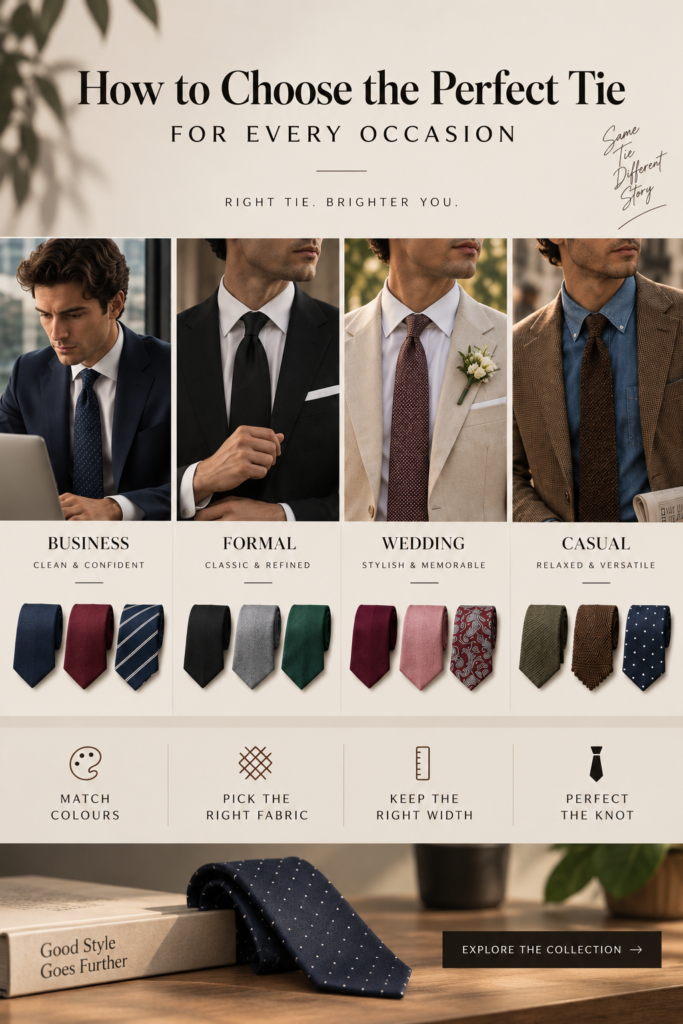
1. Understand the Occasion
The first step in choosing the right tie is considering where you are going. A tie that works perfectly for a business meeting may not be the best choice for a wedding or a casual gathering.
Different occasions call for different levels of formality.
- Business meetings: Choose refined colours and subtle patterns.
- Formal events: Solid or understated patterned ties work beautifully.
- Weddings: Experiment with elegant colours, textures, and tasteful patterns.
- Casual occasions: Brighter colours, playful patterns, and textured fabrics can work well.
When choosing ties for men, always consider the overall dress code before selecting a particular style.
2. Choosing the Right Tie for Business
Your tie is an important part of professional dressing. For office wear and meetings, the goal is to look polished without making the accessory the centre of attention.
Classic colours such as navy, burgundy, dark green, grey, and deep blue are versatile choices. Small geometric patterns, subtle stripes, and micro-prints can add personality while maintaining a professional appearance.
For important meetings, business ties in solid colours or understated patterns are particularly easy to style.
Styling tip:
Pair a navy suit with a burgundy or dark blue tie and a crisp white shirt. For a grey suit, navy, burgundy, or dark green can create a sophisticated combination.
Avoid extremely bright colours or oversized patterns when dressing for a conservative professional environment.
3. Selecting Formal Ties
Formal occasions usually require a more refined approach. Think weddings, evening events, ceremonies, corporate functions, and other occasions where you want your outfit to look especially polished.
Formal ties in silk or other refined fabrics can instantly elevate a classic suit. Solid colours are timeless, while subtle textures and elegant patterns can add depth.
For a black or charcoal suit, consider:
- Burgundy
- Navy
- Silver or grey
- Deep green
- Subtle geometric patterns
The key is balance. Your tie should complement your shirt and suit instead of competing with them.
4. How to Choose a Wedding Tie
Weddings allow you to be more expressive with your accessories. Depending on the wedding’s dress code, you can explore richer colours, elegant textures, and sophisticated patterns.
Popular wedding ties include shades such as burgundy, wine, navy, dusty pink, emerald, and muted gold. Floral patterns, paisley designs, and subtle textured finishes can also work beautifully.
For a daytime wedding, lighter and softer shades can create a fresh appearance. For an evening wedding, deeper colours and luxurious textures can make the outfit feel more sophisticated.
A simple rule:
If your suit and shirt are relatively simple, your tie can have a little more character. If your shirt already has a strong pattern, choose a simpler tie.
5. Match Your Tie With Your Shirt
One of the easiest ways to improve your tie styling is to understand how colours and patterns work together.
White shirts
White shirts are extremely versatile and work with almost every tie colour. They provide a clean background, allowing your tie to become the main accent.
Blue shirts
Blue shirts pair particularly well with navy, burgundy, red, brown, and darker green ties.
Pink shirts
Try navy, burgundy, purple, or darker shades of red for a balanced look.
Patterned shirts
If your shirt has stripes, checks, or another noticeable pattern, consider a solid tie or a very subtle pattern. Avoid combining multiple large patterns because the outfit can quickly look overwhelming.
6. Consider the Suit Colour
Your tie should also work with your suit.
A navy suit is one of the most versatile options. It pairs well with burgundy, navy, green, pink, and patterned ties.
A grey suit can be styled with navy, burgundy, black, dark green, or even muted purple.
A black suit works particularly well with classic colours such as black, silver, burgundy, and deep blue.
For brown or beige suits, earthy tones such as burgundy, rust, olive, navy, and dark brown can create a cohesive appearance.
7. Pay Attention to Tie Width
Tie width affects the overall proportion of your outfit.
A classic-width tie is versatile and works well with most suits and body types. Slimmer ties can create a more contemporary appearance, while wider ties can complement traditional tailoring.
As a general styling principle, your tie width should look proportionate to the width of your suit jacket’s lapels.
Instead of following trends blindly, choose a width that looks balanced with your overall outfit.
8. Choose the Right Fabric
Fabric can change the entire character of a tie.
Silk: Smooth, elegant, and versatile. Excellent for formal occasions, weddings, and business dressing.
Cotton: More relaxed and suitable for smart-casual outfits.
Wool: Textured and sophisticated, particularly suitable for cooler weather and relaxed tailoring.
Knitted fabrics: Contemporary and stylish, making them a good choice for smart-casual looks.
When building your collection of men’s ties, having different fabrics gives you more options for different seasons and occasions.
9. Don’t Forget the Tie Knot
The right knot can make a significant difference.
The Four-in-Hand is simple, slightly asymmetrical, and works well for everyday and business dressing.
The Half Windsor creates a more balanced and moderately formal appearance.
The Full Windsor produces a larger, symmetrical knot and is generally better suited to formal occasions and shirts with wider collars.
Whatever knot you choose, make sure the tie sits neatly against the collar and that the length reaches approximately your waistband or belt area.
10. Build a Versatile Tie Collection
You don’t need dozens of ties to dress well. A carefully selected collection can cover most occasions.
Start with a few timeless options:
- A classic navy tie
- A burgundy tie
- A subtle striped tie
- A sophisticated patterned tie
- A lighter-coloured tie for daytime occasions
- A textured tie for smart-casual outfits
Once you have these essentials, you can add more distinctive colours and patterns according to your personal style.
11. Common Tie-Styling Mistakes to Avoid
Even a beautiful tie can look out of place if it is styled incorrectly. Avoid these common mistakes:
Choosing the wrong length: Your tie should not be excessively short or hang far below your waistband.
Too many patterns: A patterned shirt, patterned suit, and heavily patterned tie can create visual clutter.
Ignoring the occasion: A bright novelty tie may not be appropriate for a formal business meeting.
Poor knot placement: Your knot should sit neatly against the collar rather than hanging loosely.
Neglecting fabric quality: A tie with good colour and design can still look ordinary if the fabric and construction don’t complement the outfit.
Conclusion
Choosing the perfect tie doesn’t have to be complicated. Start by considering the occasion, suit, shirt, colour, pattern, fabric, and overall proportions. Once you understand these basics, you can confidently choose everything from professional business ties to sophisticated formal ties and elegant wedding ties.
A great tie is more than just another part of your wardrobe. It is an opportunity to add personality and refinement to your appearance while bringing your entire outfit together.
At Colvero, we focus on timeless men’s accessories designed to complement modern wardrobes. Whether you are dressing for the office, a wedding, a formal celebration, or a special occasion, the right tie can be the finishing touch that makes your look feel complete.
Explore Colvero’s collection of men’s ties and discover a style for every occasion.
Shop now
0 Comment
Continue Reading →